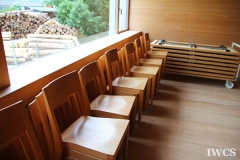
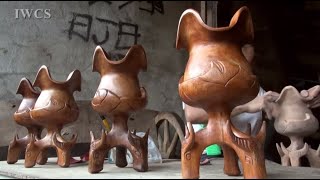
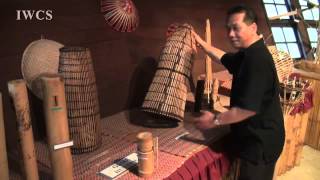
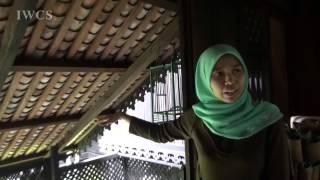
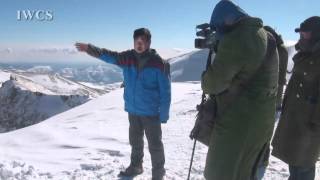
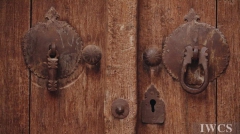
Bregenzerwald is in a valley situated between Lake Constance and the Arlberg Mountain that was once completely covered in woods, thus the abundant wood cultures exist in the region. The IWCS visited Hittisau, where the renowned Women’s Museum, set up in a modern wooden building, locates. We visited the wooden houses designed and built by a local architecture Mr. Nenning, learned about the local’s philosophy of natural wood use, and saw how the people preserve old wooden bridges. The people in the region also put great efforts to develop sustainable green energy by operating a biomass plant that consumes wooden residue left after constructions and so on.
...more
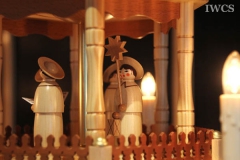
The Nutcracker Museum at Neuhausen, Germany has over 5,150 nutcrackers from 28 countries that make the world’s largest collection. The museum has both the tallest and the smallest nutcrackers in the world. The largest is 10.1 meters tall while the smallest is merely 4.9mm in size. All the items were collected out of sheer interest of the owner, the Löschners family, who initially was in the business of manufacturing woodwork machines. Having business relationships with woodworkers and artists, the father of the family, Jürgen Löschner, has gradually developed his passion for the nutcrackers and now it is his son Uwe who manages the property.
...more
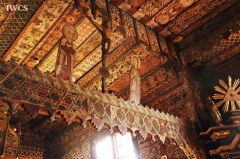
First established in 1153 at Neusass by Wolfram von Bebenburg, Schöntal was formerly a Cistercian monastery. It is located in the nature sublime at Jagsttal near a valley. This is why it is called Schöntal , meaning “beautiful valley” in German. The monastery is mainly constructed with wooden material from the local area. Adjacent to the solemn, grand wooden monastery is an educational and assembly center for the Diocese youngsters of Rottenburg-Stuttgart. In the building there are grand wooden sculptures of saints and magnificently-designed and painted wooden stairs that were made of oak and pine. They are well-maintained as the building is constantly in use.
...more
Hohenloher Freiland Museum
The Hohenloher Freilandmuseum is located in the village of Wackershofen. This fantastic open air museum, which has collected hundreds of ancient, reconstructed rural wooden buildings from around the Badem-Wurttemberg region, serves as a popular educational and tourist destination for visitors to learn about peasant life in the past. The wooden houses are constructed with local woods such as pine, oak, and beech, and in each of the houses there are traditional wooden objects that faithfully demonstrate how people live with wooden tools back in time. There are also staff members demonstrating wood turning, crafts, and wooden furniture production.
...more
Royal Museum of Central Africa
Founded in 1898, the Royal Museum of Central Africa has the reputation of being one of the most beautiful museums devoted to display the culture of Africa. The idea to establish it germinated from the 1987 Brussels International Exhibition that displayed ethnographic objects from the Congo. Currently, the museum aims to preserve and manage its collections from countries in the central region of Africa, such as Cameroon and Congo. Imported hand-made wooden objects--such as canoe, masks, and tools—are in profusion and are accompanied with depictions that explain their cultural contexts.
...more
University Leiden National Herbarium
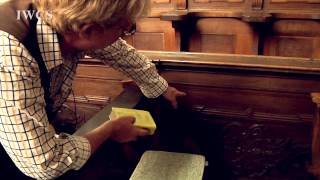
Dr. Pieter Baas, an expert of wood anatomy and former scientific director of the herbarium, guided us through the wooden specimen collection at the university. The herbarium is one of the world’s largest with over 5.5 million plant specimens collected from around the world over the last decades. The wooden specimens are also in profusion and they go through a series of bug-removing and maintenance processes before being stored. The experts on wood at the institution conduct researches around the world.
...more
Amsterdam Historical Museum
The museum, once an orphanage, mainly displays objects and paintings related to the city from the 17th century onward, including numerous ancient wooden artifacts created by local artists. There are also wooden miniatures on the city’s infrastructure such as the canal and the city hall. Vivid large biblical figures made with wood stand in the public access area, and samples of large wooden poles immersed under water that support the city’s older buildings are also in display.
...more
Previously a carpenter, Mr. Ojārs Narvils now has turned himself into a rabbit-lover and has built the whole Rabbit Town because of love revenge. This small wooden rabbit town started with Mr. Narvil’s unsuccessful love story and it suddenly dawned on him that rabbits are actually easier to handle with than women. He said rabbits return your love by giving you the warmth and staying with you. Now he only uses those skills of carpentry to do nothing else but build more wooden rabbit houses. Each house has its own characters for rabbits whose temperament suits the house. The whole rabbit town is actually a typical Latvian town in miniature.
...more
AUSEKļi MILL Open Air Museum
AUSEKļi MILL is a private open-air museum run by an enthusiastic local man, Mr. Martins Medins who is now a member of local council. He has turned his passion for culture and life into a practical idea in which demonstrations of traditional ways of living a country life and activities that engage people in fun atmosphere are helpful for raising people’s awareness of culture preservation. On our arrival, Mr. Martins Medins showed us all the equipment and objects from the olden days that he collected from all over the place and told the stories of those objects and the history of them.
...more
Latvia does not have any mountains, but yet is covered by forests for about 60% of land. In Gauja National Park, people can operate their own land and run the business in relation to nature. The Archaeological Museum where the buried houses of 9th -10th Century were revealed represents the life of then, including tools, weapons and daily objects, up to medieval time. While in Latvia, one thing you cannot miss out is that refresh your energy in a traditional Latvian Bath house which usually lies on the imaginary ley line full of spiritual power. Having a land mostly covered with forest urges people to learn to respect the nature, and the Educational programme is committing to this very concept and brings it to the global level.
...more
Ethnographic Open Air Museum of Latvia
The biggest open-air museum in Latvia, Ethnographic Open-air Museum serves various purposes for tourists and citizens in Riga. The way in which they manage this open-air museum is so unique that certain houses are open to traditional craftsmen for the purpose of demonstrating their skills and selling their work. The benefit of doing so is that craftsmen’s real time demonstration attracts people and on the other hand, people get to learn the traditional woodcrafts and the museum achieve the aim of, apart from preserving historical buildings, educating people and preserving the tradition of olden day. Dr. Mārtiņš KUPLAIS, a professional historian working in this museum, guided us around and told the stories of traditional Latvia life.
...more
Renovation on Wooden Houses
A young renovator, Mateusz Niwiński, devotes himself to his favourite job, renovating old wooden house. He has showed us the houses he renovated and his own workshop, and briefed us the current circumstance of the wooden house renovation in Poland. Due to the particular history of Poland, wooden houses in Poland were mostly built up after World War II and many shabby houses are inhabited by the Jews. In Otwock, wooden houses scatter over the whole town. Many of them need proper renovations to sustain for a longer time, but some are even illegally occupied without being claimed by anyone.
...more
Museum of Belarusian Revival
A private museum, located in a small village STUDZIWODY adjacent to the border between Poland and Belarus, is run by a Russian-origin Polish man, DOROTESZ FIONIK, who is enthusiastic about reviving the local tradition of his clan and soon expanding to the Belarusian culture revival. Half of his own wooden house has been turned into a museum displaying tools and appliances of the old days. He has then bought another wooden city house and placed it just across the dirt road as his second collection for the museum. He strives to keep and revive Belarusian rituals, traditions and language by holding Belarusian festivals with people who are passionate about their own culture.
...more
The Holy Mount of Grabarka
The tale that makes the Holy Mount of Grabarka become a centre for pilgrimage for Orthodox Christians since the 18th century is that, while the whole country suffered from a cholera epidemic, a man dreamed of being called to this mountain and washed his feet in a mountain stream in this area. He was cured by washing his feet here, and therefore this place has become well known for its miracle cure. Throughout a year thousands of Orthodox Christians carry crosses on them, be it small or big, walking to the Holy Mount of Grabarka, from far or near, to show their respect this holy sanctuary.
...more
Folk Architecture Museum in Sanok is a young open-air museum aiming at bringing the ethnographic knowledge of different period of time in history to the public, especially school kids. The most particular wooden house of all is the Jews house of 100 years old which was the first house moved into this museum. Being the only open-air museum in the most southerly point of Poland, Folk Architecture Museum has gained in popularity among all levels of schools and all age groups. All the wooden houses are relatively new as most of the houses were destroyed during World War II.
...more
Church of St Michael the Archangel
Being one of the UNESCO heritage sites, St Michael the Archangel Church in Dębno was a Gothic church built of larch wood in the 15th century. It’s still in use at present for the locals and tourists. On Sundays, the church is always packed with faithful disciples for the Sunday service and curious tourists waiting for going inside the church, opened only 10 minutes for tourists each weekend, to witness the well-preserved interior fittings and paintings. The maintenance is down to the priest who is not just the ‘tour guide’ of this historical church, but also works as a guardian of this small village and surrounding area.
...more
Chochołów: A Wooden Village
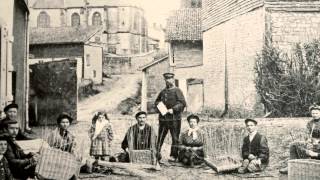
Right at the border between Poland and Slovakia, only 17km northwest to the most popular ski resort Zakopane, Chochołów had an interesting history of ‘making independent’. The uprising in 1846 fighting against the rule of Austria-Hungary made Chochołów known, and this part of historical fact is kept in the small museum and a craftsman’s private museum in this village. We were lucky to meet the owner Mr. Jan Zieder, a self-taught carpenter running a wood workshop and a private museum collecting daily objects of the old days and documents/photos/letters from the war time in the village. Every year before Easter women will scrub and wash the outer walls of their cottages to make them look nice after winter. It's interestingly only women's job.
...more
Čičmany, one of the most famous living villages in Slovakia, has the least information distributed on the internet. Having been a mysterious village to the world outside Slovakia, Čičmany needs to gain more recognition from the public to publicize the characteristics of the lime painted wooden houses. Painting lime on the wall is not just for decoration, but also to prevent the wood from cracking up with the result that these residents then start painting patterns to beautify the house. Northeast to Čičmany lies the wooden Bethlehem in Rajecká Lesná made by an enthusiastic carpenter who devoted his life on this project which was unfinished by the time he passed away. A priest afterwards was then by his passion and continued to accomplish the carpenter’s dream.
...more
Historical railway for logging in Kysuce Village
The significance of Kysuce village is the historical forest dead-end railway. Connecting two independent forest railwaysin both Kysuce and Orava regions, this forest railway offered the shortest transportation route of logging industry between these two mountainous regions in the early 20th century. The whole track length extended from 61km when it was first constructed to nearly 110km at the end of 1920s. The most valuable part of the track overcame a noticeable rise of 217.69m on the shortest distance (air line) of 1500m with three pointed dead-end system. This tailor-made narrow gauge railway serves the main purpose of transporting logs out of the forest up in the Tatras Mountain.
...more
Vlkolinec - A Living Village
Being one of the few living villages listed in UNESCO heritage, Vlkolínec was reluctant to turn itself into a proper museum. A group of volunteers found this remote mountainous village and were stunned by which they still remain the old way of living. As time goes by, however, people move out into the city gradually as there is not much to do in this remote area other than herding animals. Up until now, there are 55 houses standing in the village, but only 6 of them are inhabited by 19 people. Some of them are kept as it was and some are turned into cottages in display. People living there are actually feeling hassled most of the time with people walking around their houses. Occasionally some tourists would abruptly walk into people’s house without knowing they have intruded resident’s privacy. We were lucky that a half-drunken man invited us into his house and told us his stories and the history of this village with a big happy smile on his face.
...more
Liptov Village (Open Air Museum)
Arriving in the Liptov Village Museum, we were welcomed by a lively performance telling a story of highway man in Slovakia. Over 80% of the whole country is covered by mountains and therefore the country tale of highway man has been always a notable story to be told. The director of Liptov Village Museum, Dr Iveta Zusinova, a local grown anthropologist, commenced this museum for the sake of keeping important parts of 22 villages at which the area was wiped out to build up a dam. This museum holds various events in order to form an image of the country life in the olden days for tourists.
...more
Orava Village (Open Air Museum)
Spreading over the meadows at the bottom of the Western Tatras, Orava Village signals a good location for an open-air museum. Orava village museum is aiming to represent the exterior settings of settlements and the living environment of these villages of the 12th to 13th Century, and brings the visitors closer to the wooden structure and furniture with which the life of village people are connected. Scattering as a real village setting in Orava, the Latin school, the market, cattle place, fire alarm bell and the surrounding settings of the whole village compose the image of a mountainous village of the old time and offer the pleasant atmosphere for visitors to experience the country life.
...more
East Carpathians Biosphere Reserve stretches across three countries, Poland, Slovakia and Ukraine and constitutes one of the best protected areas for endemic and threatened animals. The part in Slovakia is Poloniny National Park, the only national park in Eastern Slovakia. The national park contains not only the primeval forests, but also normal villages and a huge reservoir. People who have lived in this area own their houses but share half of the land with the council and can do whatever they want to the house. Unfortunately, people still intend to move out of the most eastern end to big cities to earn their living.
...more
Viking Ship Museum Roskilde
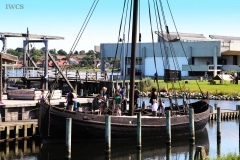
The Viking ship museum is located at the Roskilde, Denmark. The museum focuses on the preservation, reconstruction and investigation of various Scandinavian boats and ships in the prehistoric and medieval times, but distinguishes itself from others for its hands-on activities.
Visitors not only learn traditional shipbuilding techniques, such as wooden nail making and rope making, but also come on board to experience the real Viking ship cruise!
The museum has many shipbuilders in charge of the ship reconstructions on which they apply the techniques from the old time. Shipbuilders reconstruct ships in the open-air exhibition area, so the public can take a close look at their works.
...more
Sami Culture Tour in SIIDA
The SIIDA (the Sami cultural and natural museum in Inari) was opened in 1962. It provides visitors knowledge and information of Sami culture and Arctic Nature in the northernmost region of Finland.
In the exhibition hall of the SIIDA, numerous Sami wooden crafts, such as baby cradle, dishes, drinking cups, butter box, and jewelry box, etc., are well preserved and displayed. Also, there is a photo exhibition of the Sami history that tells stories of their life for generations.
In order to make a living, the indigenous Sami people have some customs, such as domesticated reindeers herding and fish catching in the river. Traditionally, the Sami lived a way of life based on seasonal movement from their winter sod dwellings or log cabins to spring, summer and autumn camps. These Sami sod huts, log cabins, and wooden boats for moving along rivers, from the 18th to 19th century, have also been collected and exhibited at the open-air area of the SIIDA .
...more
Old Rauma is the largest Nordic wooden town with over 600 well-preserved wooden architectures from the 18th -19th century, and most of which are privately owned. It is valued for its vernacular architectural heritage, and these houses, workshops and shops are still in use today.
Back in the old days, almost every household had lace-makers making bobbin lace, a technique believed to have been brought by sailors in the 18th century. Although, lacemaking had once brought wealth into the city of Rauma, it is now a declined industry and a cultural heritage practiced and preserved by local people. When making bobbin lace, lace makers need a lace pillow with pin set and wind threads on wooden bobbins, to determine the lace pattern according to the placement of wooden bobbin and pin.
The City Renovation Center exhibits tools and materials used for constructing and preserving Rauma wooden houses, and photos documenting the preservation history of these traditional buildings, are valuable and worth visiting. The center is a place where people can acquire techniques, and obtain knowledge of conserving and renovating the traditional Finnish wooden architecture.
...more
Not only does Vasa War Ship Museum in Stockholm, Sweden preserve a magnificent warship of the 17th century- Vasa, but thousands of wooden objects that were salvaged from the wreck along with the ship reveal the detail of naval warfare, shipbuilding techniques, aesthetic sense and the way of life at that time.
On January 16, 1628, Vasa sank on her maiden voyage after departing from Stockholm and sailing for just 1,500 meters. Vasa was decorated with sculptures carved in oak, pine or lime, and each of these sculptures has its underlying significance. For example, the sculptures of Roman emperors, which stand along the sides of the beak head, represent the glory and the power of Swedish King Gustav II Adolf (King Gustavus Adolphus); moreover, a male figure in a crouching position under the cathead signify that Polish men was inferior to Swedish men, because Poland and Sweden were at war in the 1620s, and more.
For over 300 years, Vasa had been lying at the depth of 32 meters in polluted water, where various bacteria and fungi had attacked the wood, and the rusted bolts of the hull had diffused into the wood and water. Today, researchers, conservators and technicians are still endeavoring in preserving the ship for the future.
...more
In 1997, Eksjo was awarded the Europa Nostra Diploma for its remarkable renovation of the traditional buildings gives a new life to the old town. Today, Eksjo has become one of the best-preserved timber-built towns in Sweden.
The city of Eksjo has burned down twice throughout its history. In 1568, the town was burn down during the First Northern War, and subsequently rebuilt in a different place that was easier to defend. In 1856, Eksjo burned down for the second time, and the fire had destroyed all of the southern part. In the 1860s, the area was re-planned and re-built, and the fire-protection system was taken into account at this time; therefore, most of the traditional buildings we have seen today are from the 17th - 18th century.
In order to protect wooden houses against fire, Eksjo has several fire-protection measures, for example, using fire-resistant glass windows, and sealing the not-in-use gate, door or window to prevent wind-driven fire from spreading; and installing water sprinkler system on the roof of houses to extinguish or suppress fire, etc... In addition, the old town has efficient alarm system where, when the fire occurs, firefighters will arrive within 5 minutes to put out the fire.
...more
Norwegian Forestry Museum
Norsk Skogmuseum (The Norwegian Forest Museum) is located at Elverum, Hedmark County, Norway. The museum aims to provide the knowledge of Norwegian forest culture and life related to forestry, hunting, fishing, and aquarium.
In the museum main hall on the ground floor, many aspects of the forestry, such as timber floating, hunting, forest industry in the old times and the present times, and social conditions in forestry, including living conditions, forest fare, clothes and dress, etc., are well introduced with pictures and exhibits of forest tools and machinery. On the first floor, visitors can see numerous exhibits of hunting, trapping, and fishing in Norwegian’s everyday life.
Outside the museum, there is an arboretum, a botanical garden of trees and bushes, situated in the southeast part of the museum. The outdoor exhibits consist of various devices employed in hunting and trapping, and cabins used during logging, hunting, and fishing from 17th -20th century.
...more
Bergen is a city and municipality on the west coast of Norway. The economy of Bergen today is based on tourism, fishery, shipping, and offshore petroleum industry. Bryggen, the old wharf of Bergen, has a series of North European wooden houses from medieval time aligned on the side of fjord. Back in Hanseatic period, Bryggen was a business district and now is preserved and listed as one of the UNESCO World Heritage sites. The museums in Bergen University with rich collections of the Vikings’ hut, appliances and wooden ships are also worth a visit!
On the campus of University of Bergen lies the Cultural History Collections of University Museum that exhibits wooden axes, huts, and shipbuilding tools used by the Vikings. Bergen Maritime Museum presents Norway’s history of shipping from the past to the present; its collections of shipwrecks and ship models include Viking ships, archeological ship remains, and artifacts.
...more
Ski museum is located in the beautiful valley of Morgedal, in Telemark. In the ski museum, visitors can watch the video introduce 4,000 years of skiing history in the multimedia room. The exhibition zone presents many kinds of skis made of wood and artificial materials. There is also a ski-making workshop demonstrating process for making wooden skis.
Part of the collection in the museum is made in the museum workshop. The workshop also accepts custom orders of making wooden skis. The handmade wooden skis were once taken as winning rewards for Australia ski competition.
All the wooden skis produced from the workshop are made by two museum ski makers - Tarjei Gjelstad, and Terje Nilsen Haugen, who also have undergone a project of making the largest wooden ski in Norway. They hope this largest wooden ski in Norway will become a representative landmark of the museum.
...more
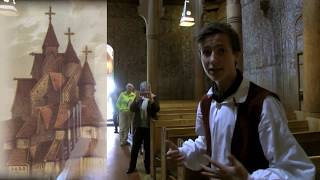
Located at Heddal in Notodden municipality, Norway, Heddal Stave Church (Norwegian: Heiterdals kircke) was constructed in the early 13th century. It is the largest among the 28 stave churches remained in Norway today. Stave church is a medieval wooden church of traditional Nordic style.
Heddal stave church is a timber-built church with three small turrets. The church contains numerous symbols of old Christian and heathen traditions. The holy cross on the turrets is the symbol of Christianity, whereas the dragon heads at the gable ends represent the old heathen motifs rooted in Celtic and Germanic sources.
...more
Ecomuseum in the Orient’s Forest
Situated at the Northeastern side of Parc Naturel Régional de la Forêt d'Orient (Orient Forest Regional Natural Park), in Champagne-Ardenne, France, Ecomusée de la Forêt d’Orient (Ecomuseum in the Orient’s Forest) well preserves abundant traditional agricultural machinery from the 16th to 17th centuries.
The open-air museum is dedicated to the memory of agricultural life of the Champagne region in the old days. There are three sites of the museum: the Maison des Jours et des Champs (The “House of days and fields”) where there are several wooden houses exhibiting chisels, ploughs, old tractors, axes, and other farming machines and tools, Boutique du charron (The Cartwright’s Workshop) where the traditional wooden wheels and wheel-making machinery are displayed, and the museum park where visitors can see several wooden barns and feel not only the beauty of France farming village but the tranquility of the country life.
...more
The Maison de l'Outil et de la Pensee Ouvriere (Tool and Trade Museum) is located in Troyes, in a Renaissance style mansion, called Hotel de Mauroy. In 1966, the city of Troyes acquired and entrusted this mansion to the Compagnons du Devoir du Tour de France, an association comprising craftsmen and artisans from the Middle Ages up to now. This association has carefully renovated the mansion and has turned it into a museum.
The museum has a rich collection of over 10,000 tools that were once used for cutting, crafting, and measuring wood by craftsmen, from the 17th to 18th century. Father Paul Feller, a Jesuit priest, is the person who first started to collect these tools since 1958. The museum also displays photos telling the history of logging, sewing, building log houses, making barrels, wheels, and more. Through these tool and photo exhibitions, the museum intends to provide knowledge and arouse the interest of apprentices, craftsmen, amateurs, and many others, about the history and the tradition of craftsmanship in the old days.
...more
Laténium Museum is an archaeology museum located in Hauterive, suburb of Neuchâtel. Its name is a combination of “La Tène”, the name of archaeological site of the Celtic civilization back in the late Iron Age, and the word “museum.”
Inaugurated in 2001, the museum has rich archaeological collections of Celtic artifacts, and those from both older and more recent periods as well. Laténium Museum has a collection of 3000 objects, including a 20-meter long Roman wooden ship discovered in Bevaix.
Apart from indoor exhibition, there is another open-air area within the museum park. The dwellings of the lake villagers could be dated back to 1,000 BC, and the museum has reconstructed several architectures in order to demonstrate the history to the visitors.
...more
Wooden Carved and Frescoed Houses
Bönigen is a small village in the canton Bern, which is located in the central Switzerland. This small village has an area of 15.12 square kilometers, where steep mountains surround a large part of the area.
The village of Bönigen is famous for its unique decorated wooden houses. Radiating from fountain square, which is the former town center, numerous frescoed houses are scattered within the old town area. Dating from 1549 onwards, these buildings functioned as either dwelling for people or storehouse for cheese.
Many of these wooden dwellings had expanded to house the enlarged family. The original structure and the expanded parts of the house could be differentiated according to the doorway or color of paint. These well-preserved wooden houses in Bönigen are decorated with colorful patterns and images, plus biblical quotes in Gothic and Roman letters that inscribed on the exterior wall of the building. Visitors could easily perceive and understand the value of these cultural legacies.
...more
Schwyz is the capital of canton Schwyz, which is located in the central Switzerland. It has an area of 53.3 square kilometers and a population of 14,331. German is the main spoken language within the region.
People in Schwyz still preserve many traditional ways of wood use, and musical instrument is one of the examples. Büchel, also known as Alphorn’s brother, looks like a trumpet but has brighter tone, is a handmade instrument mostly made of fine spruce. Chlefeli is another traditional wooden instrument, which is only played during Lent, is a clapping instrument that could only be found in the area of Schwyz.
Apart from instruments, other noteworthy crafts such as armbrust and sledge are also traditional woodcrafts that are still manufactured within the region.
In addition to handicrafts, there are a lot of wooden houses that have stood for centuries in Schwyz, and the oldest among these is the House of Bethlehem. Built in 1287, the house is well preserved and opened to the public as a museum today.
...more
Located in the north-east of Italy, Trento is the capital of the autonomous province Trentino. Back in the 16th century, it was the location of the Council of Trent, an Ecumenical Council of the Roman Catholic Church.
Stelvio National Park, near the historical city of Trento, with an area of 400,000 hectares, is the largest national park in Italy. Founded in 1935, the park is a reserve of several protected forests. A couple of traditional farm houses “maso” and log-cutting sawmills can be found in the realm of park. One of the mills has even been turned into a museum called Ruatti mill, which is open to the public for demonstrating the traditional way of utilizing water power for grinding the grains.
...more
Wooden Structure in Venice
The foundation of Venice was constructed on vertical wooden piles, which has mostly remained intact after centuries of submersion. The piles penetrated through layers of soft sand and mud until they reached a harder clay ground. In fact, apart from the footing of the city, several buildings in Venice are also either built of wood or decorated with wood, such as Doge’s Palace in the Piazza San Marco, the well-known St Mark’s Square.
Quite a few chambers in Doge’s Palace including one of the most gorgeous rooms, the Council Chamber, are decorated with elaborated paintings and carvings on wooden ceilings. The roof of the Palace is also made of strong wooden structure; we were fortunate to be able to get up to the loft and see the structure under the guidance of a local architect.
...more
Galleon Andalucia is a duplicate merchant ship of 17th century, which has 4 masts and 7 sails. The ship itself tells Spanish history and is currently berthed at Barcelona for the purpose of promoting tourism. There are 22 crew members on board taking charge of daily maintenance.
For safety concern, the way of constructing the galleon combines modern and ancient methods. The material, for instance, is a mixture of wood and fiber glass which is safer and easier for maintenance. The wood species used to build the galleon are pine and iroko, which are exactly the same materials used in the old days.
The construction of Galleon Andalucia started in December 2008, and finished in February 2010. Experts in different professions such as carpenters, fiber engineers and designers, had assembled in the south of Spain to collaborate on the project.
...more
Established in 1905, the National Coach Museum was first named Royal Coach Museum by Queen Amélia, who was aware of the cultural value of royal ceremonial carriages. The museum had only 29 vehicles in its original collection, and has started to increase its objects of collections after the establishment of Portugal Republic in 1910.
The museum is located within the Royal Riding Arena, which used to be the place for horse-training and horse-riding exhibition and games. It is housed in a building erected in 1787 and decorated with painted ceiling and tiles by several Portuguese artists.
Today, the National Coach Museum has wide collections of objects, including: coaches, berlins, carriages, chaise, cabriolets, litters, sedan chairs, and children’s cart, etc. And the exhibitions in the museum are primarily concerned with topics about the technical and artistic evolution of transportation means used by the European aristocracy dated back from 17th to 19th centuries.
...more
Lello Book shop is located in Porto. It was inaugurated on January 13, 1906, and designed by a noted engineer of the time, Xavier Esteves. The Lello Bookshop is housed in a white architecture with art nouveaux facade; its distinguished outlook stands out from the rest of the other historical buildings on the street.
When stepping inside the bookshop, you will immediately feel a welcoming and cozy atmosphere, and be amazed by the full wall height bookshelves, and the high ceiling which created an expanded view. Other magnificent wooden interior decoration, such as carved wooden spiral staircase, fine carving of famous local writers on the column, and intricate woodcarving ceiling are just as impressive.
This beautiful bookshop is now one of the attractions in Porto. It has been selected as the third best bookshop in the world by the well-known travel guidebook, the Lonely Planet.
...more
Established in 1750, Burmester is one of the oldest cellars along the Douro River. This cellar has begun the port-shipping business, mainly to the British Isle and the rest of Europe since then, and now, it is a living winery showcased wine-making tradition of the area.
In Vila Nova de Gaia, the city located just across Douro River from Porto, Burmester and many of the other cellars took the advantage of natural moisture within the area, and built wine houses with thick walls and wooden ceiling to create a suitable environment for preserving wine. However, barrels of wine stored in this area were actually transported from the Upper Douro Valley, which is also one of the oldest vineyard regions that produces one of the best wines in the world, the Porto Wine.
...more
One of the highest mountains in Romania, Apuseni Mountain, which belongs to the Western Carpathian, is dwelled by only small number of people dotted over the whole mountain range. Wood is the only and the main resource people have up in the mountain. They rely on wood to make a living and live their life. People travel on cart into the deep forest to log and bring their own supply home. We met a plank maker, a rich man who had hired two local young guys to build his new house and a poor family who has no job and only rely on the berries collected from the forest nearby to bring them some income.
...more
Cut through by the Carpathian Mountains in the middle, Romania has the mountainous terrain from the centre to the west. Because of the geographic barrier, the north-west of Romania has a peasant life in contrast to the tourist-oriented prosperity of the south-east Romania. Maramure?, a typical mountainous area situated at the north-west border amongst Romania, Hungary and Ukraine, due to its geographic location, has been handed between Hungary, Romania, Ukraine and CzechoSlovakia over last hundreds of years, and therefore the wooden buildings, interior and exterior decoration, and people’s life style related to wood are all affected by the past sovereign.
...more
The ASTRA National Museum Complex
The ASTRA Museum of Folk and Civilization, one of the ASTRA National Museum Complex, is recognised as the largest permanent open air ethnographic exhibition in Europe. The chief director of National Museum Complex, Valeriu Ion Olaru, kindly showed us the distinctive wooden architecture within the open air museum and allowed us to go into buildings to explore its interesting stories and facts.
Apart from the museum, Mr. Olaru guided us into the largest restoration institute, situated next to the open-air museum, to show the scientific way of restoration and preservation of various types of material, including wood, metal, fabric, etc.
...more
National Village Museum of Bucharest
National Village Museum, located in the Herastrau Park, north of Bucharest, was created by Dimitrie Gusti, Victor Ion Popa, and Henri H. Stahl in 1936. From 33 units of authentic wooden constructions on the first phase of building up the Village Museum to the present 272 units, village museum has strived to preserve the traditional farms and houses from all over Romania.
The homesteads including living houses, barns and stables from different area of Romania that are all displayed in this museum represent the various lives across Romania, from farmer life, poor peasant life, rich peasant life to merchant life. Various houses in people’s daily life such as public houses (pubs), churches, mills and even playgrounds are in the range of wooden representation.
...more
Malacca, located in the southern region of Malay Peninsula, is the third smallest state in Malaysia. The capital Malacca City is 148 kilometers southeast from Kuala Lumpur, the capital of Malaysia. And the city has also been listed as an UNESCO World Heritage Site since 2008.
Malacca has been colonized by the Europeans for more than 400 years. Portuguese was the first invader after Sultanate in 1511. Malacca then became a strategic base for expansion and also for spices trading. After Portuguese, there were also Dutch, British, and Japanese colonization. It was not until 1946 that the Malays toppled the regime and Malacca finally became part of Malayan Union, which later became Federation of Malaya and then eventually Malaysia.
Malacca is therefore deeply influenced by the history of foreign occupation, which can be found not only in material remains, but also in cultural tradition, such as food, dance, and festivals. The Stadthuys, Museums of History and Ethnography, has abundant records of the past stories, especially the sailing history, which includes models of ancient wooden boats and archives.
...more
University of the Philippines Los Banos
University of the Philippines Los Banos is a prestigious, coeducational university located in the Los Banos, Laguna, Philippines. UPLB started as a College of Agriculture and has become a comprehensive university.
Today, UPLB dedicates to advancing knowledge of agriculture and forestry. UPLB focuses on many research fields, including biodiversity conservation, sustainable development, strengthening agricultural support systems and more.
After decades of effort to collect forestry and wood resources, there are over 12,000 specimens of forestry herbarium and wood collection in the university today.
The Wood Library on campus has rich information of domestic and foreign wood collections, and they welcome any other universities abroad to exchange their wooden specimens with them.
...more
Ifugao Aboriginal Priestess
Ifugao province is on Luzon Island, the northern part of the Philippines. It is located in a mountainous region with rice terraces, river valleys and forests, where people still make a living by mostly farming and wood carving.
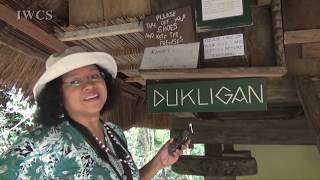
We were lucky to meet an aboriginal priestess, Elena Anagiwan, introducing us the ritual of harvest, which is a way to show our respect to God.
...more
Tam-Awan Village is located in Pinsao Proper, Baguio City, and it is famous for reconstructions of traditional wooden houses that recreate scenery of the native village in the area. Tam-awan now has seven Ifugao huts and two Kalinga houses.
The Ifugao hut is compact and relatively simple, and usually made of hard wood. The Kalinga house, on the other hand, is more spacious and is made of pinewood. All of these huts and houses are built by using mortise and tenon joint without a single nail.
Apart from wooden houses, Tam-awan village is also a venue for art exhibitions and workshops, with the aim to draw more people’s attention to the traditional culture and offer a platform for artists to perform their art.
...more
Mines View, also Mines view park, is where visitors can not only see the breathtaking mountainous landscape, but a spectacular view of copper and gold mines of the early 20th century.
Mines View Park is one of the most popular/visited parks in the Benguet. There are many woodcraft souvenir shops in the surrounding area, where tourist can purchase unique aboriginal woodcrafts made by local carvers.
If lucky enough, tourists may also have the chance to see Ifugao teenager dress in their traditional costumes, and play traditional wooden drums to attract tourists’attention.
...more
Asin road, a famous road in the Baguio City, Philippines, is known for its wooden lacquer painting and polishing. Almost all woodcrafts in Baguio city or from the surrounding areas are sent to Asin road to be painted and polished. Lacquer painting and polishing is the last step of woodcraft making. These steps can brighten the wood colors, prevent termites, and cover minor flaws of the original wood surface.
On Asin road, most of the painters are women, because men are usually involved in carving or working in the city. Women used to paint and polish woodcrafts at home or in the neighborhood to earn some money to support their family.
Asin road can be regarded as the hub of woodcrafts making where carved woodcrafts are sent for painting and polishing. After all the processes are completed, finished products will be sent to Manila city and to be sold domestically or abroad.
...more
Penang, located on the northwest coast of Peninsula Malaysia by the Strait of Malacca, is the second smallest Malaysian state and the eighth most populous.
Penang is composed of two parts – Penang Island, where the governmentis, and Seberang Perai on the Malay Peninsula.
George Town is the busiest and largest city in Penang. The inner city of George Town is a UNESCO World Heritage Site and there are numerous century-old wooden houses standing by the street. Grand Chinese clan buildings and kongsi with magnificent structure and exquisite wooden carvings scatter in the city and tell of prosperity and the history of the immigrants.
...more
The island of Langkawi, also named as the Jewel of Kedah, is located some 30 km off the mainland coast of northwestern Malaysia. It has been a popular tourist spot for its natural pristine beauty.
With a population of about 64, 792, the island has a rich culture of wood and timber use is embedded in the life of the residents. For example,the Temple Tree/ Bon Ton Resort has a collection of ancient houses from allparts of Malaysia that display the unique wooden constructions of each regionand culture.
There are also traditional Malay wooden houses scattering on the countryside. Among them, we visited a large, luxurious private residence,which is a blend of tradition and modern construction.
...more
Carey Island, located 3 hours of drive away at the southwest of Kuala Lumpur, is home to the native Mah Meri tribes, who are known for their magnificent wooden craft and masks.
The Mah Meri model the masks after the ancestral spirits,who they believe can ward off evil spirits and solve problems.
Samri Abdul Rahman, a renowned artist of traditional Mah Meri tribe wooden mask-making, shares with the world the mystic cultural significance of the Mah Meri woodenmasks. Through a demonstration of mask-designing and carving, Samri also shows how he blends in imagination and tradition believes into his profession.
...more
Kuching is the most populous city of the East Malaysian state of Sarawak, which is located on the island of Borneo. The city covers an area of 1,863 square kilometers (719 sq mi) and has an estimated population of 1 million.
Sarawak has more than 40 sub-ethnic groups, including Iban, Chinese, Malay, Bidayuh, Melanau and Orang Ulu…etc. Since each group has their distinct language and culture, this multi-ethnic diversity has provided Kuching region a rich cultural and linguistic landscape.
...more
We traveled to the suburb of Kuala Lumpur where we have visited National University of Malaysia and Seri Menanti. These visits allow us to understand better the uniqueness of traditional Malay houses.
National University of Malaysia is 30 km away from KL downtown, there is another delicately carved traditional Malay house, which used to be owned by an aristocrat back in the early 1900s. The structure of the house is well kept now for research purpose.
Seri Menanti is about 100 km away from the southeast of KL downtown,. It is the royal capital of the state of Negeri Sembilam. One of the landmarks within the small town is Istana Lama Seri Menanti, a 4-story wooden old palace, which was constructed without a single nail.
...more
Kuala Lumpur is the federal capital city of Malaysia and located in Peninsular Malaysia. The city covers an area of 243 square kilometres (94 sq mi) and has an estimated population of 1.6 million. It is the cultural, financial and economic center of Malaysia.
We visited Rumah Penghulu Abu Seman, a preserved traditional Malay house, and an exhibition on wooden arches in the National Museum of Malaysia. In addition to these, the Forest Research Institute Malaysia (FRIM), a governmental organization in forest management and sustainable development is also one of the remarkable places we have visited within downtown Kuala Lumpur.
...more
Erdaobaihe town is located in the south of Yanbian Korean Autonomous Prefecture, the foot of Changbai Mountain. The town is rich in its natural resources and has 94% of forest coverage and 190,000 hectares area of forest.
Because of its average altitude of 800 meters, the freezing weather is suitable for growing pines and birches. Here in Erdaobaihe town, there are 120 different species of trees and 30 types of precious trees.
Erdaobaihe town is one of the most important lumber yards in China. Therefore, 300,000 cubic meters of lumbers are produced at Erdaobaihe town every year.
...more
Changbai Mountain (North Scenic Area)
Changbai Mountain has rich natural resources with 190,000 hectares of nature reserve. It is also an ecological tourist attraction, including virgin forests, lakes, waterfall, hot springs, and valleys…etc.
The north scenic spot of Changbai Mountain contains the largest number of attractions among three slopes, including Small Sky Pond, Changbai Waterfall, Underground Forest and the Heaven Lake. During wintertime, the high altitude of Changbai Mountain causes the frozen surface of the lake and pool and it creates a beautiful landscape.
Apart from the natural sceneries, Changbai Mountain is also the origin of ethnic minorities. According to ancient tales, Manchu people originated at this “sacred mountain.”
...more
Songjianghe Town is at the southeast of Fusong County. The area has rich natural resources with 89.2% of forest coverage and 17,000 hectares of forest. Here, lumber storage can reach up to 3.7 million cubic meters.
Songjianghe Town is only 41 kilometers away from Heaven Lake; hence, it is called the “First Town at the Foot of Changbai Mountain”. Songjianghe Town has convenient transportation, which provides good condition for developing tourism.
Ginseng and pine nuts are two specialties in this area. The folk tale of Laobatou – the ancestor of gathering ginseng - is prevailing in the area that people even build a temple to worship him.
...more
The Last Wooden House Village at Changbai Mountain
Gudingzi village (now renamed as JinJiang village) is located in the Fusong County, is famous for its wooden constructions. It has a history of 400 years and there are 44 households left in the village. Here, Manchu is the main ethnicity.
Due to its high altitude of 900 meters, there is only little agricultural development in the village. Therefore, the villagers mostly rely on gathering and exchanging vegetable, medicine and pine nuts from woods for money and food.
The harmony way of living with the nature has captured the attention nationwide, so does the wooden houses. Gudingzi village is now preserved as the last wooden house village at Changbai Mountain.
...more
Fusong County is located at the southeast of Jilin Province where Changbai Mountain is. Not only the magnificent natural landscape, but also the richness of resources attracts millions of tourists from the world.
Fusong County has a history of ginseng planting for over 400 years. In 1982, the total output of ginseng has reached 7,500,000 kilograms. Therefore, Fusong County is named as the “hometown of ginseng in China.”
Ginseng planting is the prominent industry in Fusong County where there is the biggest ginseng market in the world. Within the county, there is a ginseng museum that records and preserves the tradition of gathering ginseng in China.
...more
Changbai Mountain (West Scenic Area)
Changbai Mountain is at the border of China and Korea, with the peak of 2691 meters. It is the highest mountain in the northeast of China. Due to its high altitude, the variety of plant species is rather great. From the river valley to the top of the mountain, there are various species of plant ranging from Temperate Zone to Frigid Zone.
There are three slopes, which are the north, south and west scenic spot, within the terrain of China all leads to the top- the Heaven Lake. The Heaven Lake is the largest and highest volcanic lake in China. Every year from November to the next June, the lake is frozen except only for the little area of the crater.
At the west scenic spot, the main attractions are the grand valley and the underground river shaped by glaciation.
...more
The Camellia in Zixi Mountain in Chuxiong is world-famous and it attracts numerous tourists every year. The video is introducing the Camellia, including the size of flowers, the number of petals and the explanation of natural variation. Furthermore, we can see these 600-year-old Camellias and those with natural variation.
...more
Xishuangbanna Tropical Botanical Garden
Xishuangbanna Tropical Botanical Garden (XTBG), founded in 1959, is the largest botanical garden in China. Under the leadership of the famous botanist Professor Cai Xi Tao, Xishuangbanna Tropical Botanical Garden is a national research institution focusing on forest ecosystem ecology, conservation biology and resource plant development. It is a comprehensive research programme that engaged in biodiversity conservation and sustainable uses of plant resources. Nowadays, there are around 12,000 species of tropical plants are well preserved here.
Xishuangbanna Tropical Botanical Garden has set a goal to be the World Class Botanical Garden with the support from Yunnan government. Xishuangbanna Tropical Botanical Garden has also made outstanding contributions to the area of science research, species preservation, science education and the development of technology.
Xishuangbanna Tropical Botanical Garden preserves over 12,000 species of tropical plants in a large tropical rainforest of 1100 ha. Also, it has established regular cooperation with over 50 countries. In recent years, Xishuangbanna Tropical Botanical Garden has successfully organized and hosted a series of international conferences, and has also included outstanding scholars in the world as honorary professors.
Xishuangbanna Tropical Botanical Garden has been recognized as National Knowledge innovated Base, National Youth Base of Science, National AAAAA Rank Tourist Spot, and National Demonstrated Civilized Tourist Spot. There are more than 500,000 people coming to the garden annually for tourist and educational purposes.
...more
Channapatna has already started producing sandal oil soaps since 1916. This sandal oil factory in Mysore is the only one in the world that manufacturing 100 percent pure sandalwood oil soap. However, the factory is currently only working 25 percent of its capacity because of the shortage of sandalwood resource.From the log to essence oil, the whole process is taken place within the factory. Apart from soaps, incenses and other sandal products are all of high quality with fair price.
...more
Channapatna - Wood Handicrafts Village
Channapatna, located at the south-west of Bangalore, is well-known for its wooden toy-making. It has been estimated that more than 6000 people in Channapatna are employed in manufacturing toys in about 250 workshops and 50 factories. The prosperity of wooden toy-making has rewarded Channapatna as the “toy-town.”At the suburb of Channapatna, there is a traditional village. A row of bungalows, colorful walls, and lovely children portray the beautiful rural village. There are a few toy factories in the village. Although the exterior looking is not distinguishable, the buzz of motors gives the truth away. In the factory, workers share motor and use lathe to produce wooden toys.
...more
Sri Kaveri Handicrafts Industry
There are two stories in the handicrafts shop in toy-town – Channapatna. The upper floor serves as a shop, while the downstairs is a manufactory. Here, visitors can closely see each process of toy-making. This is indeed a fascinating experience. All the toys are traditionally made of ivory wood by hand and are naturally dyed. These non-toxic toys are not only of high quality but priced fairly. In the shop, there are many other kinds of local wooden crafts. If you are interested in wooden handicrafts, Sri Kaveri is definitely worth a visit.
...more
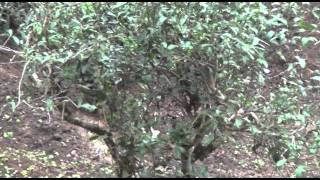
The Nannuoshan Tea Forest represents the tea culture of the Hani people, a minority ethnic group in Xishuanbanna. In addition, the biodiversity is so rich because of the elevation and climate. Forests located at an altitude between 1,500 to 1,600 meters are generally called monsoon evergreen broad-leave forests and forests above an altitude of 1,600 meters are called mid-montane humid evergreen broad-leave forests. Nannoushan is located at an altitude of 1,600 meters at the border of two climate zones, which explains why both tree species can be found in Nannoushan. High altitude areas in this region are also called High Altitude Wetlands because at higher altitudes, the air temperature drops, water vapor condenses, air humidifies and rainfall is more frequent. South Yunnan is located in a tropical mountainous area. The high elevation contributes to the vivid climate. South Yunnan is located in a high altitude area ranging from 67 to 3,000 meters, up to 4,000 meters above sea level. The mountain is located in a low altitude area which accounts for various climates and a rich biodiversity.The local economy exists symbiotically with the local ecology. The Dai people live in a low altitude region (the basin) and the Hani people live in the mountains. The local biodiversity is affected by the climate and living conditions of the respective groups. Both tea and bamboo cultures can be found in Nannuoshan. The blending of the two cultures is common in Yunnan.
...more
The JinJen Octagon, built in 1703 A.D.was one type of Hinayana Buddhist architecture. It was used as a venue for meeting and chanting amongst monks. During the Cultural Revolution, Chinese government forbade people from participating in any religious activities. Many monks at the JinJen Octagon were sent back to their countriesor hometowns. The revolution ended in 1976. Restrictions on religious activities were lifted in the 1980s and JinJen Octagon gradually regained its vitality.
Experts congregated at the JinJen Octagon to discuss plantsspecies, tree growths and usage surrounding it. The biggest tree around the JinJen Octagon is the Bodhi tree (sacredfig). Next to it is a Blossoming Tree, which is known as the Golden Lotus forits shape. The Golden Lotus belongs to the Musaceae family. Growing on the Bodhi tree was Lumeria Rubra and ferns. Therefore, the Bodhi tree itselfis regarded as a botanical garden.
...more
There is a wood carving factory located in Jinghong City. Because of governmental regulation as well as the rising environmental awareness, people cannot arbitrarily cut down trees, many factories are using abandoned wood to create. After the traditional wood houses in Myanmar, Laos, and China were tear down, these wood were giving second life in these carving factory, by using them to create antique furniture, which are the imitation of Ming and Qing dynasty.
...more
Manyangguang Forestry mostly lived by Dai people now, who use Dai language still. Dai language is 80 percent similar to Thai language in Thailand. Some Manyangguang schools teach bilingual languages (Dai language, Mandarin). To the overall village, there are no much differences from a decade ago to now, but the original wood tiles have been replaced by modern cement. Traditional Dai houses - so called Ganlan-style Architecture (Stilt-style Architecture), which often kept animal on the ground floor, and people live above. The usually use selected wood to build the Ganlan- style Architecture, because selected wood can prevent termites from decay the wooden column. Dai people also know that chicken eats termites, so they raise chicken too. In addition, they raising buffalo and pigs, so that mosquitoes will attack livestock rather than human being, deducting the chance people getting malaria.
...more
Manfeilong Pagodas are called “Tanuo” meaning “bamboo tower” in the Dai language. The pagodas were built in 1204 BC from brick and stone. There are nine towers total with the main tower in the center surrounded by the other eight forming an octagon. It is considered a valuable work of art and a national symbol for ancient buildings. The Manfeilong Pagodas and other Buddhist temples are built by the minority ethnic groups whose religion is Theravada. The trees and flowers to be planted around the temples are chosen according to Theravada beliefs. Each species of tree is a sacred representation of each generation of Theravada Buddha.
...more